
The Gold Standard in Tooth Replacement
A Dental Implant Is the Closest Thing to Growing Back a Natural Tooth.
When you lose a tooth, you face a choice: replace it with something that approximates a tooth’s appearance, or replace it with something that functions like a tooth at its root.
A bridge sits on top of the gum and requires grinding down the healthy teeth on either side. A denture rests on the gumline and causes ongoing bone loss. A dental implant is placed directly into the jawbone—where a root belongs—and the bone grows around it.
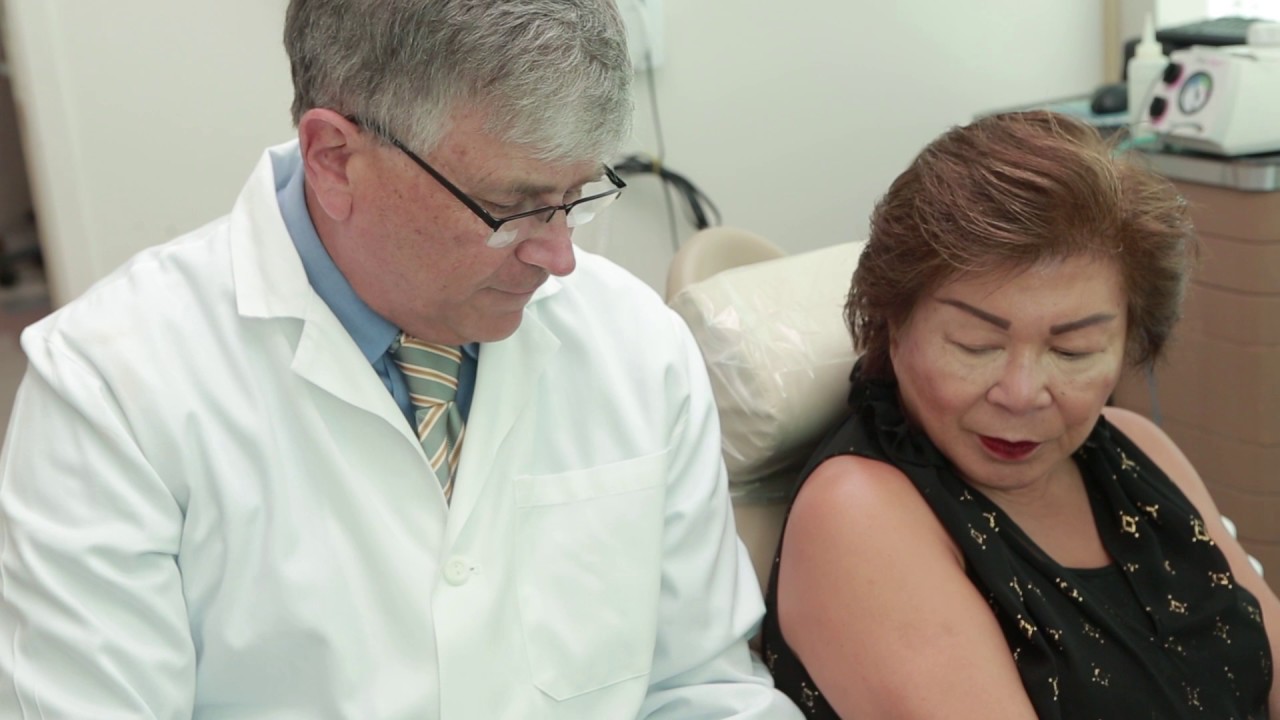
The result is a restoration that does not shift, does not require special maintenance, does not damage adjacent teeth, and preserves the jawbone that tooth loss otherwise erodes. With proper care, an implant can serve you well for many years. The crown attached to it typically lasts 10+ years, depending on its location and materials. For most patients with a single missing tooth—and for many with multiple missing teeth—it is simply the right way to replace what was lost.
Dr. Hovden handles most implant placements and final restorations in the same Daly City office. His Kois Center and Spear Institute occlusal training means every implant is planned around bite function and long-term structural health, not just aesthetics. Operating microscope precision at every stage means a fit and finish that reflects the AACD standard.
Most Placements In-House
Placement & restoration in one Daly City office
AACD Accredited Fellow
1 of 80 worldwide—Kois & Spear occlusal expertise
Operating Microscopes
Precision fit for every placement and restoration
Digital Guided Surgery
Most accurate placement based on initial plan
Financing Available
Financing is available with a consultation from our office
How a Dental Implant Works
Three Components. One Natural-Feeling Tooth.
A dental implant is not a single object—it is a three-part system designed to replicate the structure of a natural tooth from root to crown. Understanding the anatomy helps explain why implants feel so natural and why planning each component correctly is so important.
The system only works well when all three components are planned in concert, which is why Dr. Hovden’s Kois-trained occlusal planning and his involvement from initial imaging through final restoration matter. The final crown must be planned before the implant is placed, not as an afterthought. This sequence produces a result that looks and functions like a natural tooth for years to come.
Placement & Restoration Under One Roof
Most Implants Placed and Restored In This Office. Every Referred Case, Planned and Attended.
Many dental practices place implants but refer the final restoration elsewhere—or they restore implants placed by an oral surgeon they have never met. Dr. Hovden handles most implant placements and final restorations in the same Daly City office, which eliminates the coordination challenges and the information gaps that fragmented implant care creates.
When specialist surgical expertise is required for complex anatomy, sinus involvement, or larger full-arch cases, Dr. Hovden refers to trusted surgeon colleagues. But his role does not end at the referral.
Dr. Hovden on Referred Cases, In His Own Words:
“When I refer to surgeons I participate in the planning and on large cases am present during surgery in the specialist’s office to help create the best outcomes possible. Modern digital planning tools are utilized and implants are placed with guided surgery to ensure the most accurate placement, based on our initial planning.”
This matters because the final restoration should inform the surgical plan—not the other way around. When the restoring dentist designs the crown before the implant is placed, the implant goes in exactly where the restoration needs it. That is the correct sequence. It is how Dr. Hovden works on every case, whether he places the implant himself or attends the surgery with a specialist colleague.
Single Tooth, Multiple Teeth, or Full Arch
Which Dental Implant Solution Is Right for You?
Dental implants solve a range of tooth loss scenarios from a single missing tooth to complete arch restoration. Dr. Hovden will assess your bone, bite, and goals at your consultation and guide you toward the most appropriate option.
Single Tooth Implant
One implant post, one abutment, and one crown replace a single missing tooth without touching or altering the healthy teeth on either side. This is the most conservative option for a single missing tooth and the one Dr. Hovden typically recommends over a bridge when bone allows. The adjacent teeth stay completely intact. The jawbone at the implant site is preserved. The result is indistinguishable from a natural tooth.
Book Your Consultation →
Multiple Teeth Implants
When several teeth are missing in a row, implant-supported bridges can replace multiple teeth using fewer implants than replacing each tooth individually. Two implants can support a three-tooth bridge, for example, without altering any existing healthy teeth. Dr. Hovden’s Kois-trained occlusal planning is applied to every multi-tooth case to ensure the load across the implants is properly distributed for long-term function and comfort.
Book Your Consultation →
Full-Arch & Implant-Supported Dentures
For patients missing all or most teeth in an arch, implant-supported dentures—including the All-on-4® treatment concept and full-arch fixed prostheses—provide a complete, permanent, non-removable solution anchored to 4 to 8 implants. In most cosmetic cases, temporary teeth are attached the same day or the next day after surgery. The prosthesis typically lasts up to 20 years, depending on the design and materials chosen.
Learn About Full-Arch Implants →
Why Implants Are the Right Choice for Most Patients
What You Gain When Your Replacement Tooth Has a Root
Preserves Adjacent Teeth
A bridge requires permanently grinding down the healthy teeth on either side of the gap. An implant replaces only the missing tooth, leaving adjacent teeth completely untouched. Dr. Hovden’s philosophy is additive dentistry: never remove healthy structure unnecessarily.
Prevents Bone Loss
When a tooth is lost, the jawbone at that site begins to resorb because there is no longer a root stimulating it. An implant replicates the function of a root, stimulating the bone and preventing the collapse that changes facial structure over time. Bridges and dentures do not achieve this.
Looks and Feels Natural
The crown is custom-crafted to match your existing teeth in shape, size, and shade. Because it is anchored like a natural root, it feels stable when biting and chewing. Most patients report that after a few weeks, they forget the implant is there.
No Special maintenance
An implant is cared for exactly like a natural tooth: brushing, flossing, and regular dental visits. No adhesives, no soaking, no special rinses. The simplicity is part of what makes the implant experience so different from denture management.
Better Long-Term Investment
A bridge must eventually be replaced, and when it fails, the healthy teeth that were ground down to support it are at risk. An implant crown typically lasts 10+ years. The initial investment is higher, but the long-term cost of ownership compares very favourably once the full picture is considered.
Confidence Restored
A missing tooth—especially in a visible position—affects how you smile, how you eat, and how you feel in social situations. An implant that looks, feels, and functions like a natural tooth removes all of that self-consciousness. It is simply a tooth.
Implant vs. Bridge vs. Denture
Why an Implant Is Usually the Most Conservative Choice.
Dr. Hovden’s philosophy is clear: do the least dentistry possible to keep you healthy. For most missing teeth, that means an implant.
|
Dental Implant |
Dental Bridge |
Partial Denture |
|
|---|---|---|---|
|
Adjacent Teeth |
Clasps attach to adjacent teeth; can loosen them over time |
||
|
Bone Preservation |
|||
|
Stability |
Removable—may slip during eating or speaking |
||
|
Longevity |
10–15 years before replacement is typically needed |
5–8 years before relining or replacement |
|
|
Maintenance |
Special floss threaders needed under bridge |
Daily removal and soaking required |
|
|
Appearance |
Can look natural, but gum recession may expose margin |
May look artificial—visible clasps |
|
|
Additive Philosophy |
Relies on existing teeth—may compromise them |
Dental Implant
Dental Bridge
Partial Implant
Am I a Candidate?
Most Adults with a Missing Tooth Are Candidates. Here’s What Matters.
Dental implants are not right for every patient in every circumstance, but they are appropriate for far more patients than many people expect. The key factors are bone volume, general health, and oral health. Even patients with significant bone loss—a common concern—are often still candidates with bone grafting or with techniques like All-on-4 that work specifically with reduced bone volume.
A consultation with 3D CBCT imaging is the only way to know for certain. Dr. Hovden will review the imaging with you, explain what is and is not possible for your specific anatomy, and give you a clear, honest picture of your options—including the honest answer when an implant is not the right choice for your situation.
The Only Way to Know Is a Consultation
Candidacy cannot be determined without examining your specific bone volume, anatomy, bite, and health history. Dr. Hovden’s consultation includes a thorough clinical examination, 3D imaging review, and a clear, honest assessment of your options—with costs, timeline, and realistic expectations explained before any treatment is planned.
What to Expect — Start to Finish
The Dental Implant Process
Every step explained before it happens. No surprises—just a clear path from missing tooth to natural-feeling replacement.
Consultation & 3D Imaging
Dr. Hovden reviews your dental and medical history, examines the site, and takes 3D CBCT imaging to assess jawbone volume, density, and anatomy. This appointment produces a clear picture of what is possible, which option is most appropriate, and what the full treatment plan and investment will be. The crown design begins here—before any surgical planning is finalized.
Bone Grafting (If Needed)
If bone volume at the implant site is insufficient, a bone graft is placed first. This may be done at a separate appointment or simultaneously with implant placement in some cases. Grafting requires a healing period before the implant can be placed, which usually takes 3–6 months. Not all patients need grafting; the 3D imaging determines this definitively.
Digital Planning & Surgical Guide
Using digital planning software, Dr. Hovden maps the precise implant position based on the available bone, the planned crown location, and occlusal requirements. A surgical guide is fabricated from this plan; it is used as a template that ensures the implant is placed in exactly the right position and angle during surgery. For referred cases, this plan is shared with the specialist surgeon.
Implant Placement
The implant is placed surgically using the guided surgical template. Dr. Hovden performs most placements in the same office. For referred specialist cases, he participates in pre-surgical planning and, on larger cases, is present during surgery at the specialist’s office to ensure the placement is aligned with the final restoration plan. A healing cap or, in cosmetic cases, a temporary tooth is placed the same day or next day.
Osseointegration: Healing Period
Over 2 to 4 months, the titanium implant fuses with the surrounding jawbone through osseointegration—the biological process that makes the implant permanent. During this period, you attend monitoring appointments to confirm integration is progressing well. In cosmetic cases, you wear a temporary tooth throughout. You are never without a smile.
Abutment & Final Crown
Once osseointegration is confirmed, the final abutment is placed and the permanent crown is fitted under the operating microscope. Bite and margins are verified meticulously. The result, crafted to AACD-level aesthetic standards, looks and functions like a natural tooth. You will receive clear maintenance instructions at this appointment.
Total timeline: 3 to 8 months depending on whether bone grafting is needed. Osseointegration accounts for most of the time; the surgical appointments themselves are straightforward. In cosmetic cases, you have a temporary tooth from the day of surgery onward.
Patient Reviews
The Dentist Who Tells You the Truth—Even When It Costs Him
“I came in expecting to spend $20–30k on veneers. Dr. Hovden talked me out of it. That alone tells you everything about his integrity. He spent over an hour with me on the first visit — cancer screening, TMJ evaluation, muscle palpation, 20+ photos, pocket measurements, bite analysis. This wasn’t a sales consultation; it was an actual diagnostic exam. His philosophy is ‘do the least amount of dentistry possible to keep you healthy.’ He clearly cares more about long-term outcomes than billing. If you want a dentist who will be honest with you even when it costs him money, this is the guy.”
Jay R. — Google Review



Your Questions, Answered Honestly
Dental Implants FAQs
The questions patients ask most. Something not covered? Call 650-755-6000.
A Missing Tooth Is Worth Replacing the Right Way. One Consultation Tells You Everything.
Honest assessment. Clear options. A treatment plan built around your specific bone, bite, and goals—not a sales pitch. Dr. Hovden’s implant consultations are thorough, transparent, and pressure-free.
901 Campus Dr, Suite 202, Daly City, CA 94015 · Mon–Thu 8:00 AM – 5:00 PM · Serving the Bay Area